- Executive Offense
- Posts
- 🔴 (Release) The Arcanum Security Context Project
🔴 (Release) The Arcanum Security Context Project
More secure LLM generated code

Jason Haddix
January 19, 2026
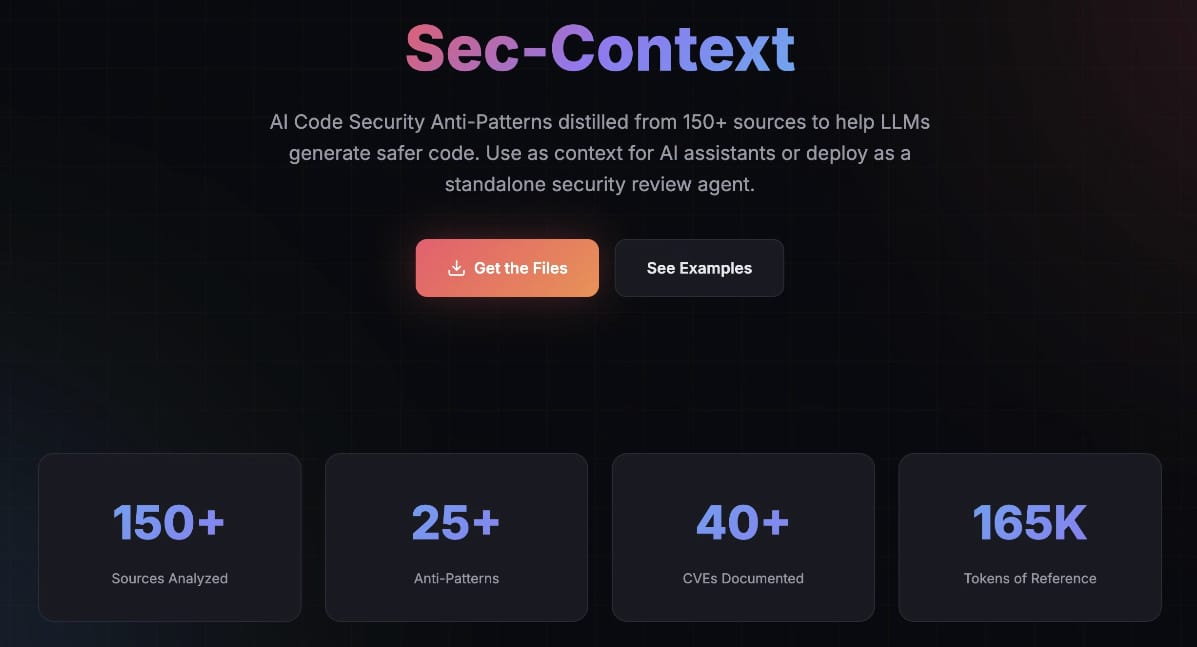
Hey everyone, Happy new year!
It’s already been crazy exciting for us at Arcanum. Today we are releasing a new AI security resource for you all! Introducing…
A comprehensive security reference distilled from 150+ sources to help LLMs generate safer code
The Problem
AI coding assistants are everywhere. 97% of developers now use AI tools, and organizations report 40%+ of their codebase is AI-generated. But there's a critical gap: AI models consistently reproduce the same dangerous security anti-patterns, with studies showing:
86% XSS failure rate in AI-generated code
72% of Java AI code contains vulnerabilities
AI code is 2.74x more likely to have XSS vulnerabilities than human-written code
81% of organizations have shipped vulnerable AI-generated code to production
We built this project to close that gap. The goal isn't to replace human security review; it's to catch the obvious, well-documented anti-patterns that AI consistently reproduces, freeing up human reviewers for the subtle, context-dependent security decisions.
What We Created
Two comprehensive security anti-pattern documents designed specifically for AI/LLM consumption:
ANTI_PATTERNS_BREADTH.md (~65K tokens)
A complete reference covering 25+ security anti-patterns with:
Pseudocode BAD/GOOD examples for each pattern
CWE references and severity ratings
Quick-reference lookup table
Concise mitigation strategies
ANTI_PATTERNS_DEPTH.md (~100K tokens)
Deep-dive coverage of the 7 highest-priority vulnerabilities with:
Multiple code examples per pattern
Detailed attack scenarios
Edge cases frequently overlooked
Complete mitigation strategies with trade-offs
Why AI models generate these specific vulnerabilities
The Top 10 AI Code Anti-Patterns
Based on our ranking matrix (Frequency × 2 + Severity × 2 + Detectability), these are the most critical patterns to watch for:
Rank | Anti-Pattern | Priority Score | Key Statistic |
|---|---|---|---|
1 | Dependency Risks (Slopsquatting) | 24 | 5-21% of AI-suggested packages don't exist |
2 | XSS Vulnerabilities | 23 | 86% failure rate in AI code |
3 | Hardcoded Secrets | 23 | Scraped within minutes of exposure |
4 | SQL Injection | 22 | "Thousands of instances" in AI training data |
5 | Authentication Failures | 22 | 75.8% of devs wrongly trust AI auth code |
6 | Missing Input Validation | 21 | Root cause enabling all injection attacks |
7 | Command Injection | 21 | CVE-2025-53773 demonstrated real-world RCE |
8 | Missing Rate Limiting | 20 | Very high frequency, easy to detect |
9 | Excessive Data Exposure | 20 | APIs return full objects instead of DTOs |
10 | Unrestricted File Upload | 20 | Critical severity, enables RCE |
How to Use These The Files
Important: These Are Large Files
Breadth version: ~65,000 tokens
Depth version: ~100,000 tokens
This is intentional. They're designed to be comprehensive references.
Option 1: Large Context Window Models
If you're using a model with 128K+ context (Claude, GPT-4 Turbo, Gemini 1.5), you can include the entire breadth document in your system prompt or as a reference file.
Option 2: Pieces for Smaller Contexts
Extract specific sections relevant to your task:
Working on authentication? Pull the Authentication Failures section
Building an API? Use the API Security and Input Validation sections
Handling file uploads? Reference the File Handling section
Option 3: Standalone Security Review Agent (Recommended)
The ideal use case: deploy a dedicated agent that reviews AI-generated code against these patterns. This agent:
Takes code as input
Checks against all 25+ anti-patterns
Returns specific vulnerabilities found with remediation steps
Works as a guardrail between AI code generation and production
Option 4: Standalone Security Review Skills - Claude Code (Recommended)
Another ideal use case: deploy a dedicated skill(s) in claude code that reviews AI-generated code against these patterns. This agent:
Takes code as input
Checks against all 25+ anti-patterns
Returns specific vulnerabilities found with remediation steps
Works as a guardrail between AI code generation and production
┌─────────────────┐     ┌──────────────────────┐     ┌─────────────┐
│ AI Code Gen     │────>│ Security Review Agent │────>│ Reviewed    │
│ (Copilot, etc.) │     │ + Anti-Patterns Guide │     │ Code Output │
└─────────────────┘     └──────────────────────┘     └─────────────┘
Research Sources
This guide synthesizes findings from 150+ individual sources across 6 primary research categories:
Source Type | Examples | Key Contributions |
|---|---|---|
CVE Databases | NVD, MITRE CWE, Wiz | 40+ CVEs documented including IDEsaster collection |
Academic Research | Stanford, ACM, arXiv, IEEE, USENIX | Empirical vulnerability rate studies |
Security Blogs | Dark Reading, Veracode, Snyk, Checkmarx, OWASP | Industry reports and analysis |
Developer Forums | HackerNews (17+ threads), Reddit (6 subreddits) | Real-world developer experiences |
Social Media | Twitter/X security researchers | Real-time incident documentation |
GitHub | Security advisories, academic studies | Large-scale code analysis |
(Sponsor)
Questions Every CISO Should Ask about MCP
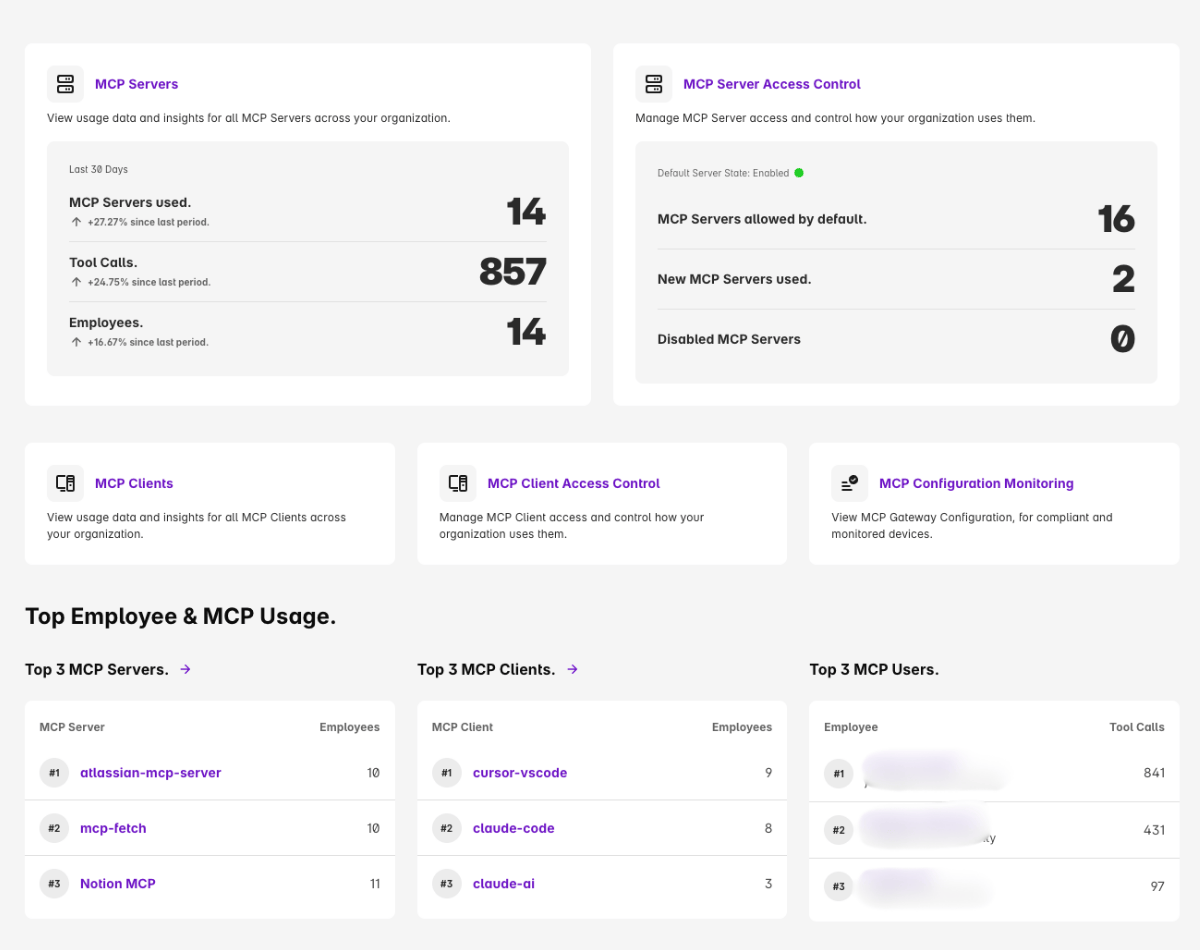
As AI agents use MCP to connect directly to enterprise tools and data, many organizations lack basic visibility and control.
Can you identify every MCP client and server in use and who’s using them?
Can specific tools or capabilities be allowed or blocked?
Are tool-call payloads inspected for sensitive or unstructured data in real time?
Is MCP activity logged in an audit-ready way for compliance?
When policy is violated, can users be guided safely instead of breaking workflows?
Harmonic Security provides immediate visibility and real controls, blocking risky clients or data flows before something slips through.
Join a small group of security leaders getting early access 👉 Harmonic Security MCP Gateway 👈
(Jason Note) MCP Security is an emerging field. Applying discovery to the access they have and what they can do paramount for AI system security. In our AI Pentests we see vulnerable implementations in more than 50% of the tests we run.
/ Outro
As always, this is just the beginning. We’ve been working on this project over the holidays and although we think it’s an EXCELLENT starter context for secure code, we think that we can do some AMAZING things with it. Look out for Claude Code skills coming soon.
Happy new year!
-Jason
